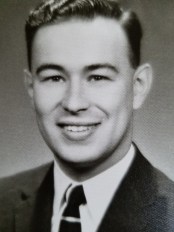
 The Reverend Dr. William D. Webber was born in St. Charles, Illinois on July 1, 1930, the fourth of six children of Leroy Dewey Webber and Freda Diderichsen Webber. The story goes that as his parents contemplated naming him Zachariah Malachi, his Aunt Dora Diderichsen, who happened to be the attending nurse, filled in the birth certificate herself with William Diderichsen. He told a simpler version: he came on the first of the month, so his parents called him Bill.
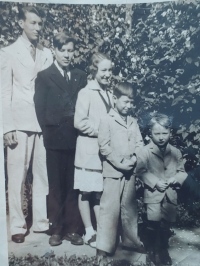
The Webbers were a musical family, each child playing an instrument. Bill sang bass and played the tuba and was much in demand in the Chicago area to fill in with orchestras and bands whooping it up with Sousa marches. For a while he considered becoming a professional musician and conductor.
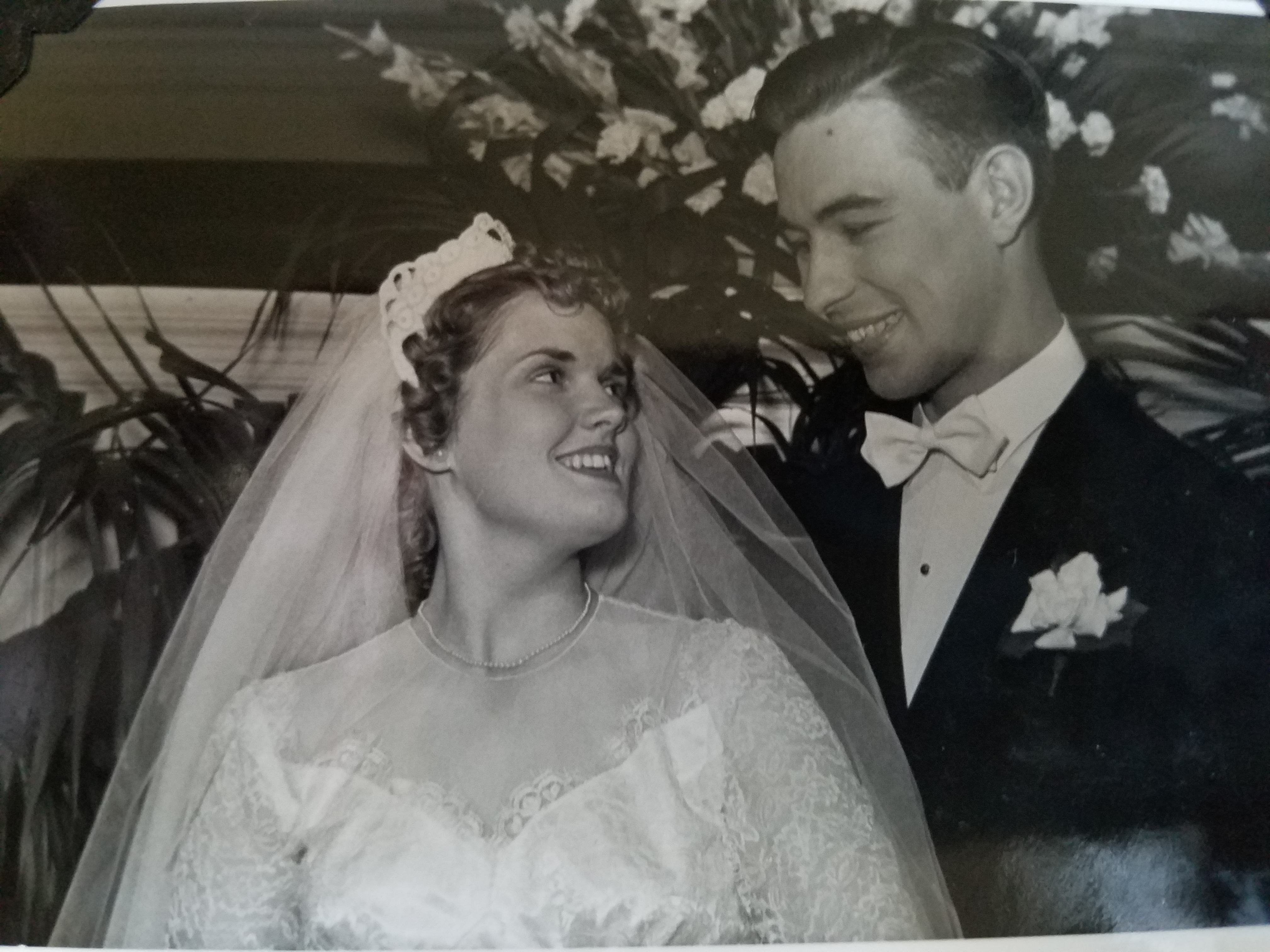
One day while decorating the fellowship hall of College Church in Wheaton, Illinois, for a high school youth group event, Bill saw the most vibrant and beautiful girl in the world on a ladder, laughing and hanging colorful streamers. She was Marilynn Carlson, the only daughter of Alice and Arthur, who had recently moved to Wheaton from Chicago. Though their families had polar opposite family dynamics, the two hit it off. They were married by college president Dr. V. Raymond Edman in College Church on June 16, 1952, the day they graduated from Wheaton College, where they’d both majored in speech. For his senior recital, he presented the entire book of Lost Horizon by memory.
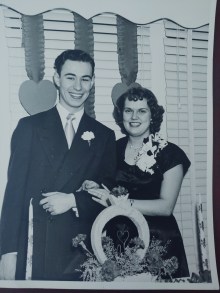
Bill went on to Northern Baptist Theological Seminary, while working as the choir director at Central Avenue Baptist Church in Chicago. When their pastor moved on, young Bill became the de facto pastor during the search. From there, after graduating from seminary as an American Baptist pastor, he and Marilynn accepted a call to pastor the small First Baptist Church of Hutsonville, Illinois, where Marilynn, a credentialed teacher, ran the one-room schoolhouse. Bill also directed the local high school band and shocked the community by having them play the newfangled “Rock Around the Clock.” While in Hutsonville, they welcomed their daughter Sharon.
Bill’s next church was in Momence, Illinois, home of the gladiola festival and (at the time) an active mob community. Bill remembered when the capo of a rival family warned him before a funeral that he’d “better not pray [the deceased] into heaven!” It was in Momence they added their son Stephen.
From there, Bill accepted the call to the First Baptist Church in of Park Forest, Illinois. They lived there for five years and oversaw the building of both the parsonage and the new sanctuary. Park Forest was a “planned community,” and Bill found it an enjoyable challenge to help the driven young commuters find the importance of their spirituality.
The young family then spent 10 years in Springfield, Missouri, where Bill became senior pastor of University Heights Baptist Church, which had a large, active congregation, a youth group, and soon, a touring youth choir. Bill especially enjoyed helping start an ecumenical clergy group. During this time, he earned his doctorate at Midwestern Theological Seminary. He and Marilynn shared their love of travel as they led tour groups to Israel, Egypt, Syria, Jordan, and Greece, among other countries. The family also did a pulpit exchange for a summer with Rev. Jack Haring, a pastor from Brighton, England.
From there, Bill became the senior pastor of the historic First Baptist in Seattle, Washington, and then First Baptist of Stockton, California, making dear friends in every city. He retired from pastoring to become the Director of Mount Rubidoux Manor, an American Baptist Retirement Home in Riverside, California.
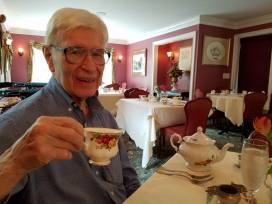
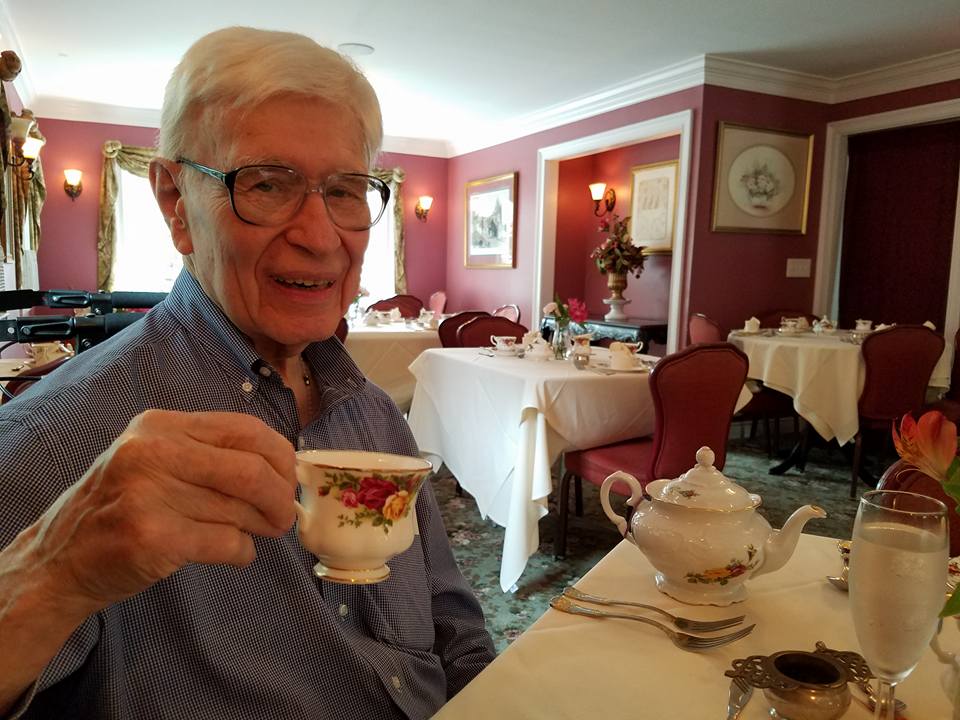
With Marilynn, he wrote the bestselling A Rustle of Angels. This was followed by How to Become a Sweet Old Lady instead of a Grumpy Old Grouch, both from Zondervan, as well as Tea with the Angel Lady. In retirement, they began an active speaking career and hosted groups from all over the world for teas in their home.
Bill loved the Lord and he loved people. Whenever someone would come to speak to him, he would stop what he was doing and give them his full attention. His sense of humor was legend, as was his unwavering support of his friends, congregants, and anyone who crossed his path. One of his favorite Biblical characters was Barnabas, the “son of encouragement.”
When Marilynn’s health began to fail, he and Marilynn moved across the country to be near their children in New York.
Bill was predeceased by Marilynn in 2013, as well as by his parents, his brothers Lee and James Webber and sisters Betty and Janet.
He died peacefully with his son and daughter in attendance on 02/02/2020 at 2 p.m. (Central time, where he was born) in his apartment, 2202. His entire family, including all the grandchildren, were present the week before to celebrate his life and faith and say good-by.
He is survived by daughter Sharon Linnéa, a novelist and biographer, her husband, Robert Scott, Director of Faith Formation at Trinity Church Wall Street and their children, Jonathan, who works at Activate Marketing Services in NYC and Linnéa, who just graduated with a degree in Criminology and double minor in Anthropology and Dispute Resolution. He is also survived by his son Stephen, Executive Director of BerkleeNYC and Dean of Strategic Initiatives for Berklee College of Music, daughter-in-law Susan Webber, a painter and social activist, and their kids Aubrey Turner and Laser Malena-Webber of the nerd-rock comedy duo, the Doubleclicks.
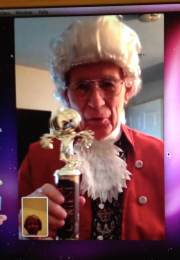
In lieu of flowers, and in his honor, the family has established the the William D. Webber Prize for Humorous Short Stories to celebrate his love for storytelling and humor. Friends who care to are invited to join in.
 On August 9, 2015, Dr. William D. Webber preached this sermon at the Chapel at Cedar Crest, in Pompton Plains, New Jersey, where he lives. After a life of enjoying speaking (without notes!), he announced privately to his family, “I will not preach again. My mind isn’t what it was. That time has passed.” Below is that sermon. It was fitting, as it sums up perfectly who he spent his whole life being.
 Ben Franklin once wrote that in this world, nothing can be said to be certain but death and taxes. I beg to differ. First, you probably could hide in a cave for a very long time and not pay taxes. Death is indeed certain but meant for a different blog post.
 The change can be smaller than that. Do you often have oatmeal or cereal for breakfast? Buy a new bowl that you love. Is there somewhere you go often? Take a new route. Eat at a new restaurant. Find a new television program—these days there are thousands! Make a list of old friends you don’t hear from often and call one every week.
 The final change I made was this. My wife Marilynn wanted to be married to a man with a full head of hair. It was important to her that, after I became bald the same way my dad and brothers did, that I wore a hairpiece. After Marilynn died and as I got older, it became more and more of a nuisance. When I moved to assisted living, I decided enough was enough. I was going to make this change on my own.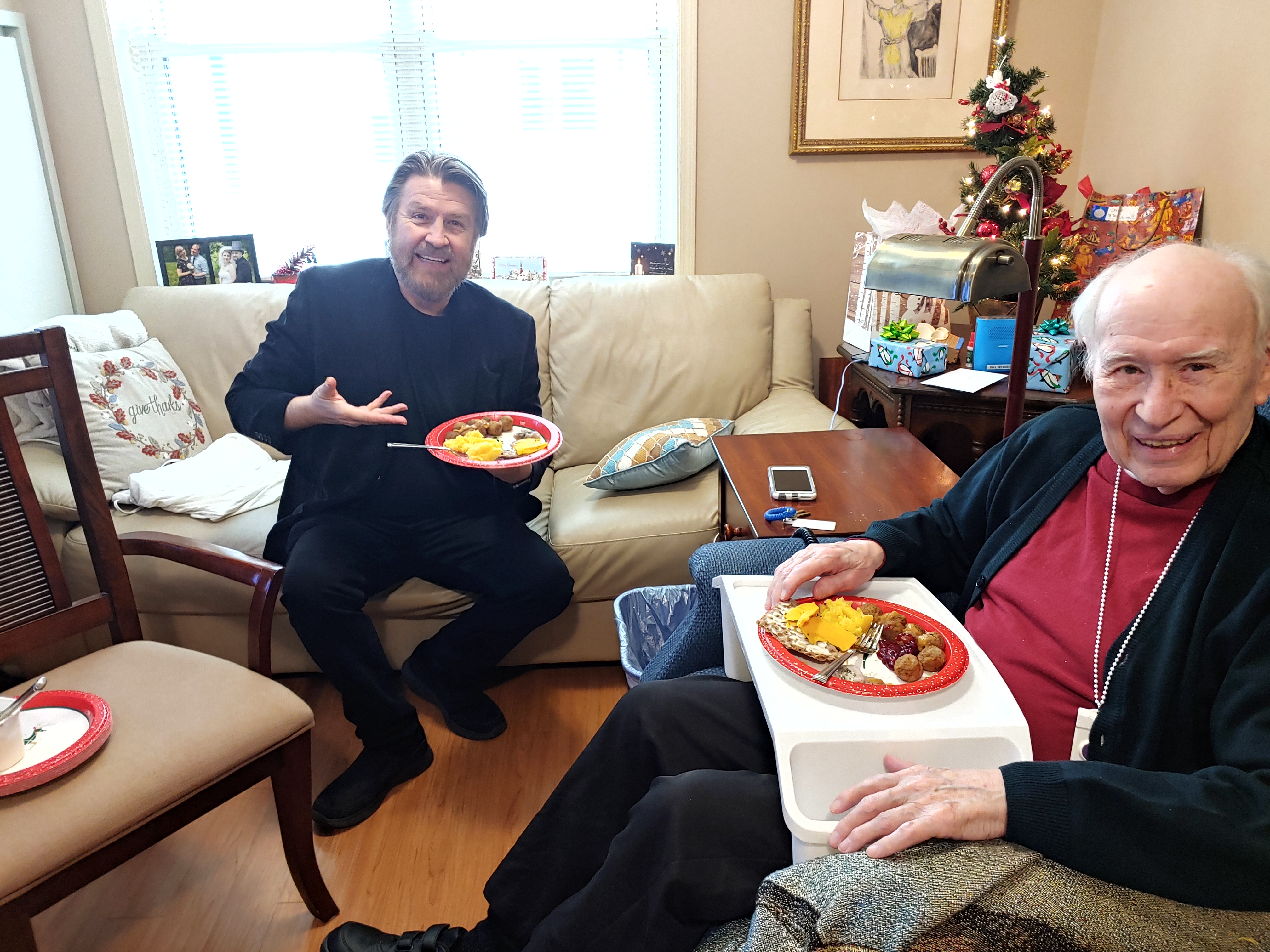
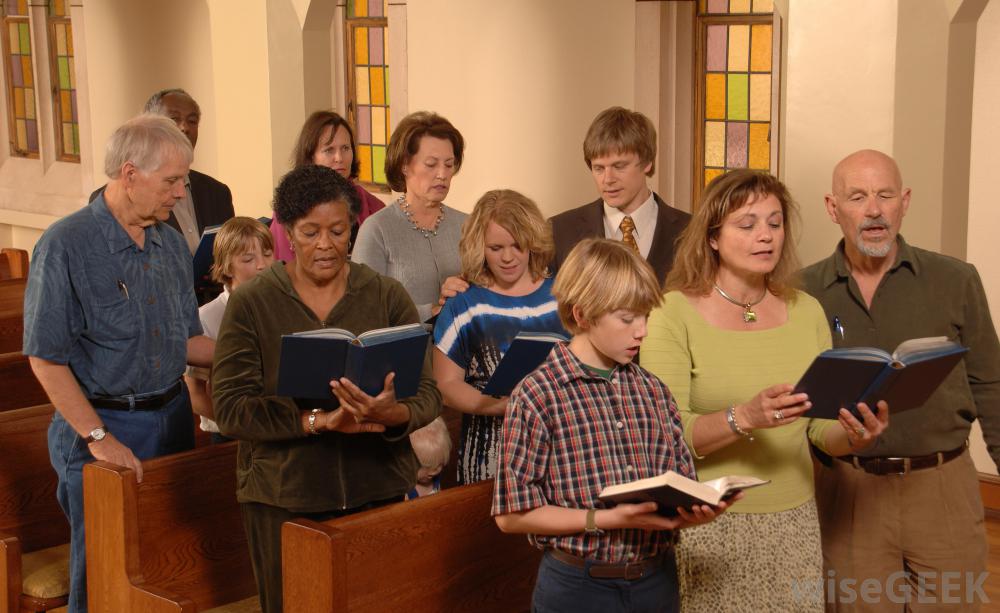
 Now that I’m mostly homebound, I’m grateful that our church broadcasts its service. Several friends have said they sometimes watch, or they watch if they’re in the mood, or they watch a broadcast from a larger church to be inspired by the message. When I tell them I find that hour on Sunday to be one of the most meaningful of my week, they sometimes ask how that is. Here is my answer.
 their history online. Almost every hymn has an interesting background and reason that the lyricist or composer wrote it. Knowing this will make the songs mean more to you as you sing.
 See if your church office can have a point person for you and others watching at home. Keep praying for those in need. Send them notes or give them a call, if appropriate. Keep up with their situation. You are likely in a unique position to be a prayer warrior for them. Take this seriously.
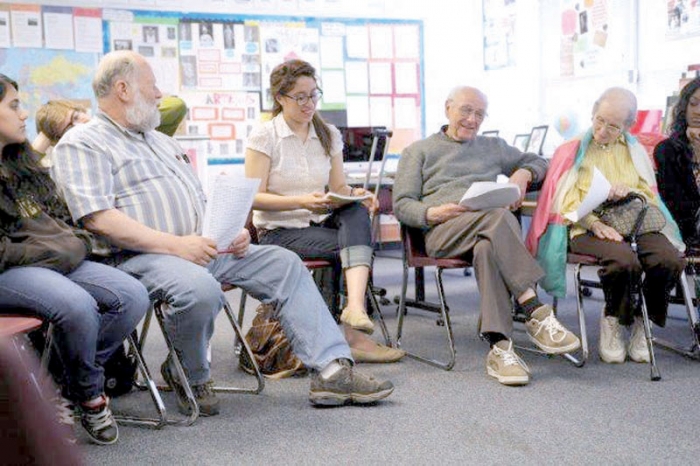 One of the hardest things about getting older is a loss of purpose, and of being able to help, truly help, other people and this world of ours.


 So This Is Retirement?